Lost in Translation — Or Not: The Honest Truth About Getting By in Bodrum Without Speaking Turkish
Let's start with the reassuring part, because it's real: Bodrum is one of the more English-friendly coastal destinations in the Mediterranean world. Decades of international tourism have seeded the peninsula with hotel staff, real estate agents, restaurant managers, and marina workers who can communicate in English with varying degrees of fluency. If you arrive knowing zero Turkish, you will not be immediately helpless.
Now for the part the reassuring part leaves out.
The English Bubble Is Real — And It Has Walls
Yes, you can navigate Bodrum's tourist infrastructure in English. You can rent an apartment, order from most menus, arrange a boat trip, and get basic directions without a word of Turkish. But that infrastructure exists to serve visitors, not residents. And the moment you step outside it — into the government office processing your residency permit, into the local clinic where the doctor trained in Ankara and sees mostly Turkish patients, into the neighborhood market where the owner has never needed to learn English because his customers never required it — the bubble ends.
"I thought I'd be fine," says Rachel, an American graphic designer who moved to Bodrum from Austin three years ago. "And in a tourist sense, I was. But I spent the first year feeling like I was watching Bodrum through a window. I could see everything. I just couldn't touch most of it."
That window metaphor comes up repeatedly in conversations with long-term English-only residents. You can observe Turkish life. You can appreciate it. But without language, participation is limited in ways that compound over time.
What Actually Stays Closed Without Turkish
The doors that close aren't always the ones you'd predict.
Medical care is the most immediately consequential. English-speaking doctors exist in Bodrum, particularly in private clinics, but they're not always available when you need them, and they're not free. Public healthcare — which is accessible to legal residents — operates almost entirely in Turkish. Managing a chronic condition, navigating a specialist referral, or dealing with a health emergency without Turkish language skills is genuinely stressful.
Legal and financial matters are similarly fraught. Property transactions, tax filings, residency renewals — these processes involve paperwork, officials, and procedures that rarely accommodate English speakers. Fixers and translators exist, and many expats rely on them heavily, but that reliance comes with costs (financial and in terms of control over your own affairs) that accumulate.
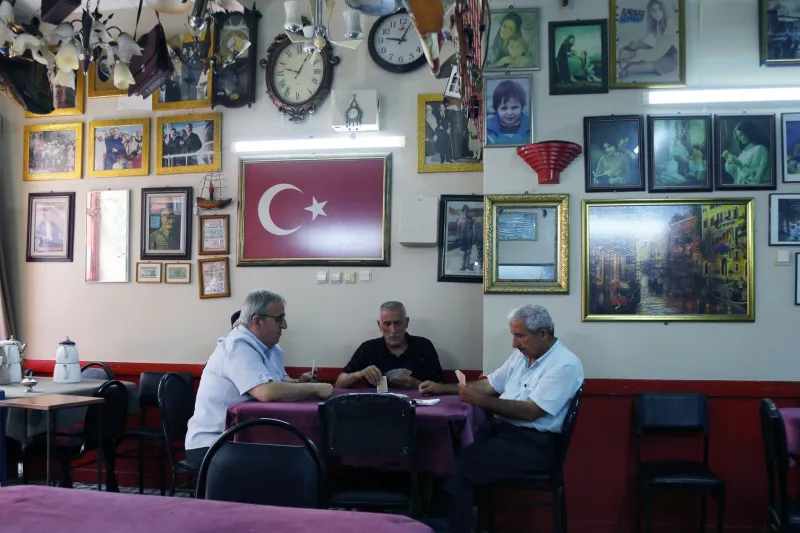
Deeper social integration is perhaps the subtler loss. Turkish social life — the tea-house conversations, the neighborhood gossip, the warmth that passes between people who share a language — remains largely inaccessible to English-only expats. You can be liked. You can be welcomed. But you can't fully belong.
"There's a version of me that exists in Bodrum," says Greg, a retired contractor from Ohio who's been on the peninsula for four years, "and it's a pretty shallow version. People are kind to me. But I know they can't really know me, and I can't really know them. That bothers me more than I expected."
The Case for Learning — And Why Most Expats Don't
Turkish is not an easy language for native English speakers. The US Foreign Service Institute classifies it as a Category IV language — among the most difficult for Americans to learn, requiring roughly 1,100 hours of study to reach professional proficiency. The grammar is agglutinative (words get built by stacking suffixes in ways that feel deeply counterintuitive), the vocabulary shares almost nothing with European languages, and the formal register differs substantially from conversational speech.
All of that said: you don't need professional proficiency to meaningfully improve your life in Bodrum. You need functional conversational Turkish — enough to handle daily transactions, follow basic social exchanges, and signal to the people around you that you're making an effort.
That effort, experienced expats say, is disproportionately rewarded.
"The day I managed to complain about the weather in Turkish to my neighbor — badly, but understandably — she laughed and invited me in for tea," says Rachel. "That had never happened in a year of living next door to her."
Learning Strategies That Actually Work for Busy Expats
The classic classroom model — structured lessons, grammar drills, homework — works for some people and bores others into abandoning the project entirely. Here's what long-term Bodrum residents actually recommend:
Apps as a foundation, not a destination. Duolingo and Babbel are useful for building basic vocabulary and getting your ear accustomed to Turkish sounds. But they won't get you to functional conversation. Use them as a warm-up, not a curriculum.
One-on-one tutoring with a local teacher. Several Bodrum-based Turkish teachers offer private lessons specifically tailored to expat needs — focused on practical vocabulary (shopping, healthcare, housing) rather than formal grammar. These lessons, often held in cafes, also double as cultural orientation.
Intentional immersion. Shop at markets where English isn't an option. Watch Turkish TV with subtitles. Order in Turkish even when the waiter can respond in English. The discomfort is the point.
Language exchange partnerships. Plenty of Turkish residents in Bodrum want to practice their English. A weekly coffee where you speak Turkish for half the time and English for the other half costs nothing and builds both skills and friendships simultaneously.
The Honest Bottom Line
Can you live in Bodrum without Turkish? Yes, in the same way you can tour a museum without reading the placards. You'll see everything. You'll understand less than you think. And you'll leave with a nagging sense that the most interesting parts were just out of reach.
The expats who report the highest satisfaction in Bodrum — the ones who feel genuinely at home rather than pleasantly displaced — are almost universally the ones who put in language work. Not because they became fluent (many haven't), but because the effort itself changed their relationship to the place.
Bodrum is generous to visitors. It's most generous to the people who show up willing to meet it halfway.