Airbnb Ate My Neighborhood: What the Short-Term Rental Boom Really Means for Bodrum Property Buyers
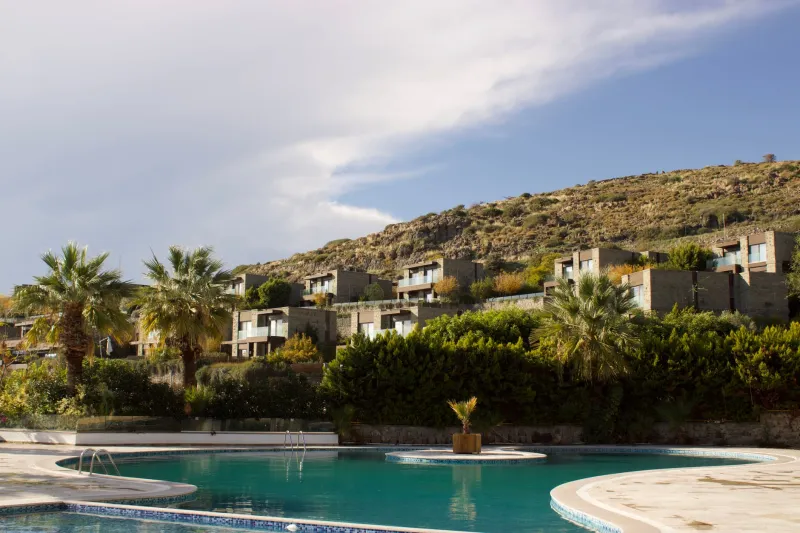
There's a villa in Yalıkavak that sat empty for most of the 1990s. A Turkish family used it for six weeks in summer, locked it up in September, and that was that. Today, that same property — or something very much like it — is listed on three different platforms, sleeps eight, and pulls in the equivalent of $4,000 a week during peak season. The family sold two years ago. A German investment group owns it now.
This is not an isolated story. It's the story of Bodrum's coastline in 2025, playing out in Türkbükü, Gündoğan, and Bitez just as much as in the more obvious hotspots. And if you're an American thinking about buying property here — whether as a vacation home, a retirement play, or a pure investment — understanding what the short-term rental explosion is actually doing to these neighborhoods is probably the most important homework you can do.
The Numbers First, Because They're Wild
Bodrum's short-term rental market has grown faster than almost anyone predicted. Occupancy rates in prime areas like Yalıkavak and Gümüşlük hit record highs in 2023 and held strong through 2024, driven by a combination of post-pandemic travel rebounds, a favorable Turkish lira exchange rate for foreign visitors, and aggressive marketing by property management companies targeting European and Gulf travelers.
For property owners, the math can look genuinely compelling. A well-positioned three-bedroom villa in Yalıkavak might generate $30,000 to $60,000 in gross rental income over a 16-week summer season. Against purchase prices that, even after recent appreciation, still sit well below comparable Mediterranean markets in Spain or Greece, the yield numbers turn heads.
That's the pitch. Here's what usually comes after the pitch.
What It's Doing to Prices — and Who Pays
The vacation rental boom has been rocket fuel for property prices in Bodrum's most desirable areas. When buyers are running acquisition math based on rental income rather than residential value, they can afford to pay more — and they do. That's great if you already own. It's increasingly painful if you're trying to buy into a neighborhood before the wave fully arrives.
More quietly, it's squeezing out long-term residents. Turkish families and year-round expats who once rented in places like Bitez or Ortakent are finding that landlords would rather list on Airbnb for $250 a night than sign an annual lease for the local equivalent of $800 a month. This isn't a uniquely Turkish problem — it's the same dynamic playing out in Lisbon, Oaxaca, and Savannah. But in Bodrum, where the tourism season is compressed and the off-season is genuinely quiet, the seasonal whiplash can feel especially jarring.
Neighborhoods that were once genuinely mixed — locals, long-term expats, occasional tourists — are slowly tipping toward something closer to resort zones. And resort zones, however beautiful, tend to lack the texture that made people want to move there in the first place.
The Regulatory Picture (Which Is Murkier Than You'd Hope)
Turkey has been working to regulate short-term rentals, and 2023 brought meaningful changes. Property owners are now required to obtain a license to legally list on platforms like Airbnb, and properties in certain residential buildings or zones may face restrictions. Enforcement is uneven — which is both reassuring and alarming depending on how you look at it.
For American buyers, the licensing requirement adds a bureaucratic layer that's easy to underestimate. Getting licensed isn't impossible, but it requires navigating Turkish administrative processes, and doing it without local help is an exercise in frustration. Management companies that specialize in short-term rentals will often handle this for you — for a cut, naturally.
The bigger uncertainty is where regulations go from here. Municipalities in popular areas have been pushing for tighter controls, particularly in neighborhoods where resident complaints have gotten loud. Buying a property today with a rental income projection baked into your purchase price carries real regulatory risk if those rules tighten further.
So Is Short-Term Rental Potential a Feature or a Warning Sign?
Honestly? It depends entirely on what you're buying for.
If you're a pure investor who doesn't plan to spend significant time in Bodrum, the rental economics in the right property, in the right location, with the right management setup, can work. The key word is right — all three times. Plenty of buyers have overestimated occupancy, underestimated management costs (typically 20-30% of revenue), and discovered that "Airbnb-ready" renovations don't come cheap.
If you're buying a place you actually want to live in or visit regularly, a neighborhood that's been heavily colonized by short-term rentals is worth thinking about carefully. The streets get loud in July and silent in November. Your neighbors change every five days. The local café that made the street charming closes because the clientele dried up in October. There's a version of Bodrum that's been optimized for short-term visitors at the expense of everything that makes it worth staying in long-term.
The neighborhoods that still feel most alive year-round — places like central Bodrum town, parts of Gümüşlük, and some of the interior villages that have been covered elsewhere on this site — tend to be ones where the vacation rental penetration is lower, not higher.
The Honest Bottom Line
Short-term rental income can be a legitimate part of a Bodrum property strategy. It is not, however, a guaranteed windfall, and treating it as one has burned a fair number of buyers who did the sunny-day math without accounting for off-season vacancies, platform fees, licensing costs, maintenance, and the very real possibility that regulations tighten.
More importantly, the presence of heavy short-term rental activity in a neighborhood is worth reading as a signal about what that neighborhood is becoming — not just what it currently yields. The Bodrum that captures American hearts is usually the one with actual community in it. That community and the Airbnb gold rush are, in many places, pulling in opposite directions.
Buy with your eyes open. The coastline is still extraordinary. Just know what you're actually buying into.
