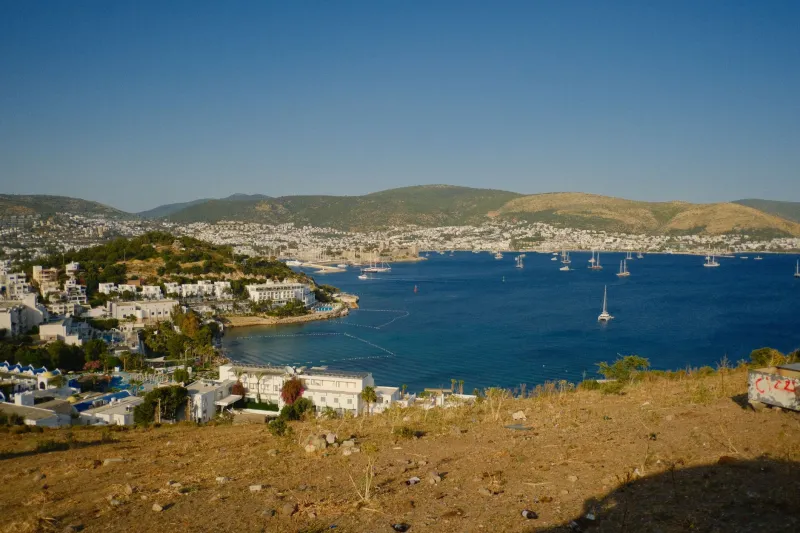
What's Driving Bodrum's Property Price Surge — And Where Smart Buyers Are Still Finding Value

Photo by Photo by Encal Media on Unsplash on Unsplash
There's a moment every hot real estate market has — the window between "early adopter" and "you should've bought five years ago." A growing number of Americans who've spent time in Bodrum are quietly asking: are we still in that window?
The honest answer is: it depends on where you look. But to understand that, you first need to understand why prices moved in the first place.
The Numbers Behind the Buzz
Bodrum's property market has been on a tear. Between 2020 and 2024, average asking prices for residential properties in central Bodrum and prime peninsula neighborhoods like Yalıkavak and Türkbükü roughly doubled in Turkish lira terms — and even after accounting for currency fluctuations, dollar-denominated buyers saw real appreciation of anywhere from 30 to 60 percent depending on timing and location.
That's not a rumor. Turkish property data firm Endeksa reported that Muğla province — which includes the Bodrum peninsula — ranked among Turkey's top five regions for year-over-year price growth consistently through 2023 and into 2024. Meanwhile, international buyer registrations with Turkish title deed offices hit record highs, with Gulf nationals, Europeans, and an increasingly visible cohort of Americans and Canadians showing up in the transaction data.
So what lit the match?
Why International Buyers Showed Up — And Stayed
A few forces converged at once. The Turkish lira's sustained weakness made entry prices look almost absurdly attractive to dollar and euro holders starting around 2018, and that perception never really went away even as prices adjusted. At the same time, Turkey's citizenship-by-investment program — which grants a Turkish passport to buyers of qualifying properties worth $400,000 USD or more — became a serious draw for buyers looking for a second passport alongside a second home.
Then COVID reshuffled priorities for a lot of people. Suddenly a four-bedroom villa with a private pool on a hillside overlooking the Aegean wasn't a fantasy — it was a legitimate remote-work setup. Americans who'd never seriously considered overseas property started running the numbers, and Bodrum kept coming up as a place where those numbers made sense.
"We'd looked at Portugal, Greece, even Bali," says Jennifer M., a tech consultant from Austin who purchased a three-bedroom home in Gündoğan in 2022. "But when we factored in what we actually got for the price — the build quality, the views, the lifestyle — Bodrum wasn't even close. It was the obvious choice."
Local developer Ahmet Çelik, who runs a boutique construction firm on the peninsula, says the buyer mix has changed noticeably. "Five years ago, maybe 70 percent of my clients were Turkish or European. Now I'd say a quarter are from the US, Canada, or the Gulf. They're more research-driven than ever, and they're not here for a vacation home — they're here to invest."
Neighborhood by Neighborhood: Where the Value Is
Not every corner of the peninsula has moved at the same pace, and that gap is exactly where opportunity lives right now.
Yalıkavak has become Bodrum's luxury headline — the marina expansion brought superyacht money, and prices here reflect that. Waterfront villas routinely list above $1.5 million. If you're buying here, you're buying prestige and liquidity. Value hunting, not so much.
Türkbükü is the Hamptons of the Turkish Riviera — stylish, social, and priced to match. It's leveled off somewhat after a sharp run-up, but don't expect bargains.
Gündoğan and Göltürkbükü, sitting between those two marquee names, offer a more relaxed vibe with meaningfully lower price points. You still get the bay views and easy access to the peninsula's best amenities, but the asking prices can be 25 to 40 percent below comparable properties in Türkbükü. Buyers who've moved here in the last two years have generally been happy with how the value has held.
Ortakent-Yahşi on the peninsula's south side is a local favorite that's flown under the radar for international buyers. Long stretches of sandy beach, a genuine neighborhood feel, and prices that still reflect the area's lower profile. Several expats we spoke to called it the "last real value" on the peninsula.
Bodrum Town itself is more stratified. The old marina-adjacent streets and hillside neighborhoods above the castle have been picked over, but pockets further inland — particularly around Konacık — offer more accessible entry points if you're open to a slightly less postcard-perfect setting.
Navigating the Buying Process as a Foreign National
The mechanics of buying property in Turkey as an American are more straightforward than most people expect, but there are genuine steps you shouldn't skip.
First, the good news: foreigners can own property in Turkey with few restrictions, and the title deed (tapu) process is well-established. You'll need a Turkish tax identification number, a local bank account, and a licensed real estate agent or lawyer — ideally both.
The part where buyers most often stumble is due diligence. Always verify that the property has a clean title, proper building permits, and no outstanding liens or municipal violations. This sounds obvious, but the Turkish real estate market still has pockets where informal construction or title irregularities exist. A reputable local lawyer (not just the developer's in-house counsel) running independent checks is money well spent.
Currency transfer is the other piece. US buyers typically wire funds to a Turkish bank account after converting to lira at the point of transaction. Working with a currency broker rather than a retail bank can save meaningful money on large transfers.
Finally, factor in ongoing costs: annual property tax (relatively low by American standards), maintenance, and if you're not living there full-time, property management fees that typically run 10 to 15 percent of rental income.
What the Next Few Years Look Like
Most analysts and local developers we spoke to expect continued appreciation in prime areas, though at a more moderate pace than the 2020–2023 run. Infrastructure investment — ongoing road improvements, expanded marina capacity, and the long-discussed potential for expanded air access — continues to support the long-term case.
The citizenship-by-investment program remains a wildcard. If the threshold rises or the rules change, it could cool the upper end of the market. But for buyers focused on lifestyle and long-term value rather than passport strategy, that's largely noise.
The honest takeaway? The window isn't closed, but it's narrowing in the most obvious spots. The buyers who'll look back satisfied in 2030 are probably the ones looking at Gündoğan and Ortakent today — not chasing the already-discovered glamour of Yalıkavak.
Bodrum's Turquoise Coast has a way of making converts out of skeptics. The question is whether you catch it before the rest of the world figures out what the early arrivals already know.