The Bodrum Nobody Puts on a Postcard — And Why It's the Best Part
Let's be honest about what most Bodrum travel content sells you: the castle at golden hour, the Yalıkavak marina gleaming with superyachts, a DJ set that starts at midnight and ends somewhere around dawn. It's real — and it's genuinely fun — but it's also about 15 percent of what the peninsula actually is.
The other 85 percent is quieter, cheaper, more interesting, and almost entirely ignored by the guidebooks. This is the version of Bodrum that people who've spent real time here end up loving most.
The Neighborhood That Time Forgot (In the Best Way)
Start in Yokuşbaşı, the old hillside quarter that climbs above Bodrum Town toward the windmills. Most visitors walk the main market street, snap a photo of the windmills, and head back down. Don't do that.
Instead, follow the side streets that peel off toward the residential neighborhoods just below the ridge. The houses here are the Bodrum you picture when you close your eyes — thick whitewashed walls, bougainvillea in colors that shouldn't exist in nature, wooden shutters painted the traditional Aegean blue. Old men play backgammon outside tea houses that have no business cards, no social media presence, and no particular interest in whether you find them.
This is where you get a glass of çay for the equivalent of about 30 cents and nobody's trying to sell you anything. It's a five-minute walk from the tourist waterfront and feels like a different century.
The Meyhane Your Hotel Concierge Won't Mention
Bodrum's restaurant scene has two tiers: the glossy waterfront places with QR code menus and English-speaking staff, and everything else. The everything else is where you want to eat.
Meyhane Kelebek (Butterfly Tavern), tucked down a residential lane in the Eskiçeşme neighborhood, operates on a model that hasn't changed in decades. There's no printed menu. The owner — a broad-shouldered man named Murat whose family has run the place since his father opened it in the 1980s — comes to your table and tells you what's good tonight. The answer is usually some variation of: fresh fish, a plate of cold mezze, bread that came out of the oven an hour ago, and a carafe of house rakı if you're so inclined.
The clientele is almost entirely local. You'll hear Turkish being spoken at every table. Nobody will make you feel unwelcome, but nobody will perform hospitality at you either — which, after a few days of tourist-zone service, is genuinely refreshing.
Similar energy exists at Gemibaşı in Turgutreis, the larger town on the peninsula's western tip that most visitors skip entirely. Turgutreis has a Friday market that draws vendors and shoppers from across the region — actual locals buying actual groceries, not a curated bazaar for tourists. The fish stalls alone are worth the trip.
The Coves That Require Effort (Which Is Exactly the Point)
Bodrum's most photographed beaches are also its most crowded. Bitez, Ortakent, Gümbet — these are beautiful, but by 11 a.m. in July you're sharing them with several thousand of your closest strangers.
The coves that reward patience are the ones that require either a boat or a walk.
Kargı Koyu, accessible by a dirt track off the road between Bodrum Town and Pedasa, is a small rocky inlet with water so clear it looks digitally enhanced. There's no beach club, no sunbed rental, no bar. You bring your own water and your own snacks and you swim in peace. On a weekday morning before 10 a.m., you may have it entirely to yourself.
For something accessible by boat, ask around the small fishing harbor in Gümüşlük — the village on the far western edge of the peninsula built around the ruins of ancient Myndos — about hiring a local fisherman for a half-day trip to the coves north of town. This isn't a formal tour operation. It's a conversation, a handshake, and a price that's a fraction of what the marina boat tours charge. The coves you'll reach are the ones locals actually swim in.
Gümüşlük Itself Deserves More Than a Passing Mention
Most travel content treats Gümüşlük as a day trip for the sunset and a fish dinner, then moves on. That's doing it a disservice.
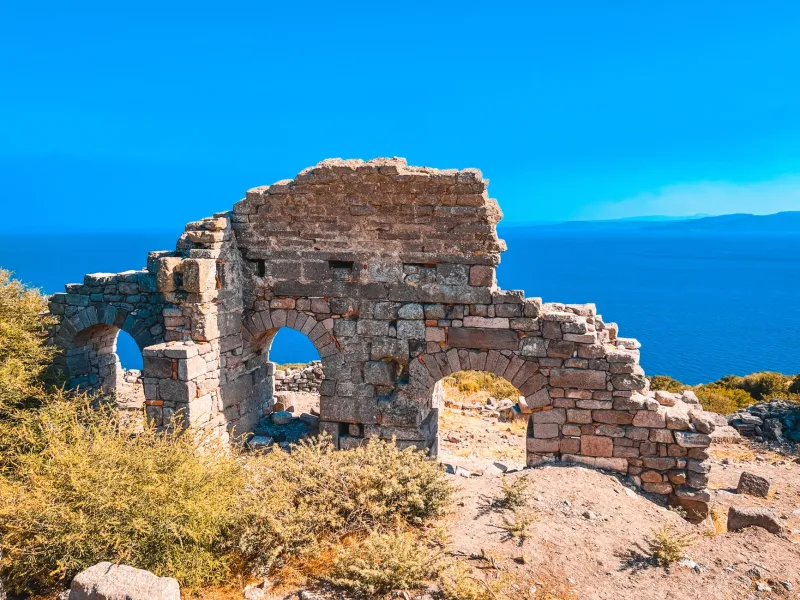
The village has a genuine artist community, a weekly classical music festival in summer that draws serious musicians from across Turkey and Europe, and a pace of life that's closer to a Greek island than the Bodrum most visitors experience. You can wade across the shallow causeway to Rabbit Island (Tavşan Adası) and walk among ancient ruins that are just... sitting there, unguarded, part of the landscape.
The fish restaurants that line the waterfront here are legitimately good and meaningfully less expensive than comparable spots in Bodrum Town. Arrive at 7 p.m. rather than 9, grab a table with your feet practically in the water, and let the evening go where it goes.
How Bodrum Actually Wakes Up
If you want to see the peninsula as its residents experience it, set an alarm for 7 a.m. and walk to the covered market in Bodrum Town's Çarşı district. The produce vendors are set up by 6:30. The bread is still warm. The coffee at the tea house on the market's edge is strong and costs almost nothing.
This is the Bodrum that exists before the tourist infrastructure switches on — before the boat tour touts take their positions and the beach club speakers start up. It's also, not coincidentally, the Bodrum that people who've relocated here from the US describe as the reason they stayed.
"We came for two weeks and extended to a month," says David K., a former marketing director from Chicago who now splits his time between Illinois and a rented apartment in Bodrum Town's backstreets. "The moment I realized I was a regular at a tea house where nobody spoke English and we just figured it out — that was when I understood what this place actually was."
The postcard version of Bodrum is worth seeing. But the version that makes people change their plans, extend their stays, and eventually start looking at property listings — that one lives in the side streets and the early mornings and the restaurants with no signs out front.
You just have to be willing to wander a little to find it.