Before You Sign: The Unglamorous Financial Reality of Owning Property in Bodrum as an American
Let's be honest. The fantasy is easy to fall into. You're standing on a sun-bleached terrace somewhere above Yalıkavak, looking out at the Aegean, and someone mentions that a two-bedroom stone house just listed for what you'd pay for a used car in Denver. Your brain does the math. Your heart does the rest.
But here's what the dream doesn't include: a stack of IRS forms, a Turkish notary who only speaks limited English, a currency that's moved 40% against the dollar in three years, and an annual property tax bill that arrives in a language you don't read. None of that is a reason to walk away from Bodrum real estate entirely — the market genuinely offers value that's hard to find elsewhere. It is, however, a reason to go in with your eyes open.
So let's talk about the stuff nobody puts in the brochure.
The IRS Doesn't Care Where Your House Is
This is the one that catches Americans off guard more than anything else. The US taxes its citizens on worldwide income — full stop. That means if you rent out your Bodrum property while you're back home in Chicago, that rental income needs to be reported on your federal return. It doesn't matter that Turkey already taxed it. It doesn't matter that the money never touched a US bank account.
You may be able to claim a Foreign Tax Credit to offset what you've already paid to Turkish authorities, but that process requires documentation, and it requires you to actually file correctly in both countries. Most American buyers don't have a Turkish accountant when they purchase. Most should.
And if your overseas financial assets — including real estate held through certain entities — cross specific thresholds, you may also have FBAR (FinCEN 114) and FATCA (Form 8938) reporting obligations. Miss those, and the penalties are genuinely painful. This isn't meant to scare you off. It's meant to get you on the phone with a US expat tax specialist before you close, not after.
Turkey's Own Tax Picture
On the Turkish side, property ownership comes with its own set of obligations that are easy to underestimate.
There's an annual real estate tax (emlak vergisi) levied by the local municipality — rates vary but are generally modest. More significant is the capital gains picture: if you sell the property within five years of purchase, Turkey taxes the gain. Hold it longer than five years and that tax disappears entirely, which is worth factoring into your exit strategy from day one.
There's also a rental income tax if you lease the property to tenants. Turkey requires landlords to declare rental income, and while the rates aren't punishing, the paperwork is real. If you're planning to use a property management company to handle short-term rentals while you're stateside, make sure they're handling the local tax filings — and get that in writing.
One more thing: Turkey charges a title deed transfer tax (tapu harcı) at the time of purchase, typically around 4% of the declared property value. Budget for it.
The Lira Question Nobody Wants to Answer
The Turkish lira has lost significant value against the US dollar over the past several years. For buyers, that's actually been a tailwind — your dollars go further, property prices in lira terms have risen but USD-denominated values have stayed attractive. Great news at purchase.
The complication comes when you own the property and start dealing with ongoing costs in lira: maintenance, utilities, property management fees, local taxes. These are all relatively cheap right now. But if the lira stabilizes or reverses, your cost base shifts. And if you ever want to sell and repatriate the proceeds, you're converting back at whatever the exchange rate happens to be that day.
None of this makes Bodrum property a bad investment. It does mean you should think of it more like a foreign currency position than a straightforward asset purchase. Factor in exchange rate risk the same way you would with any international holding.
Residency Rules: What a Property Does (and Doesn't) Get You
There's a persistent myth floating around expat forums that buying property in Turkey automatically gets you residency. It's not quite that simple.
Purchasing real estate does make you eligible to apply for a short-term residence permit, which is renewable. But it's not automatic, and it requires documentation, biometric registration, and periodic renewal. Think of it as a pathway to residency, not residency itself.
For US citizens, Turkey also offers a straightforward tourist visa — technically a visa exemption — that allows stays of up to 90 days within any 180-day period. Many American owners simply operate on this basis, spending summers at their Bodrum property and returning home before they hit the limit. It works, but it does mean you can't just decide to stay indefinitely without taking formal steps.
If you're eyeing longer-term or permanent residency, Turkey's citizenship-by-investment program is an option — it requires a minimum property investment of $400,000 USD — but that's a whole separate conversation with its own legal complexity.
The Ongoing Costs Most Buyers Underestimate
Beyond taxes and visa paperwork, there are the plain old practical costs of maintaining a property you don't live in full-time.
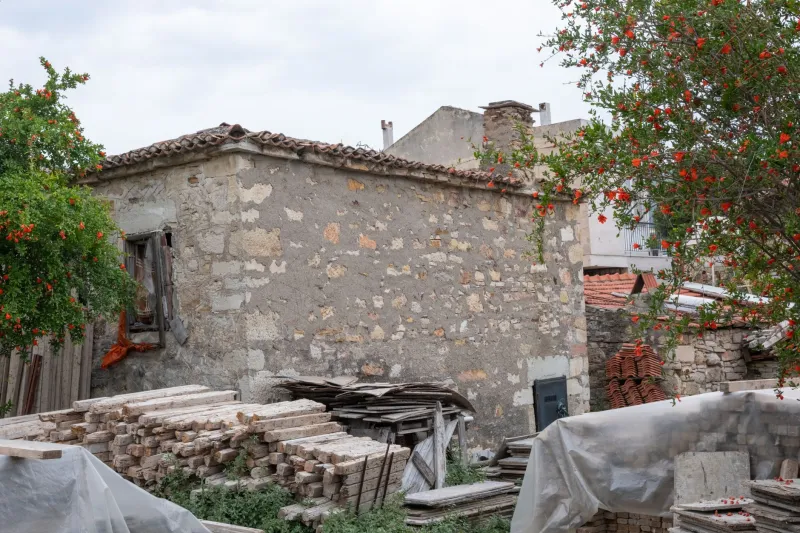
Property management fees in Bodrum typically run 15–25% of rental income if you're using a management company. Maintenance on an older stone house can be unpredictable — and getting reliable contractors isn't always easy, especially if you're coordinating remotely from the US. Utilities, internet, insurance, pool maintenance (if applicable), and HOA-style fees for gated communities all add up.
A realistic rule of thumb: budget 1.5–2% of the property's value annually for carrying costs, separate from any mortgage. Some years will be lower. Some won't.
So Should You Do It?
Honestly? For the right buyer, yes — Bodrum property can still make a lot of sense. The lifestyle value is real, the market has shown resilience, and there are genuinely good deals available if you know where to look.
But "the right buyer" is someone who has done the homework. That means consulting a US expat tax attorney and a Turkish real estate lawyer before signing anything. It means understanding your IRS obligations and building a relationship with an accountant who handles international clients. It means going in with a realistic picture of carrying costs, currency exposure, and the bureaucratic patience required to maintain a foreign asset.
The Turquoise Coast is as beautiful as advertised. Just make sure you're not paying for that beauty twice — once at the notary's office, and again when the tax bills arrive.