School Choices, Real Stakes: What American Parents in Bodrum Actually Do About Their Kids' Education
For childless travelers, Bodrum is mostly a question of where to eat, where to swim, and whether the gulet rental is worth it. Add a couple of kids to that equation and the whole calculus shifts. Suddenly you're not just evaluating a destination—you're evaluating a school system, a social environment, and a future your children had no vote in.
American families are moving to Bodrum in growing numbers, and the education question is one of the first things they hit. It's also one of the least-discussed. Here's what actually happens once the suitcases are unpacked.
The International School Route: High Standards, Higher Bills
For families who want something closest to the American academic experience, international schools are the obvious first stop. The Bodrum area has a handful of options, and a few within reasonable driving distance in Muğla province. These schools typically teach in English, follow curricula that align loosely with European or American standards, and attract a mix of expat kids from the US, UK, Germany, and beyond.
The catch? Cost. Tuition at a reputable international school in Turkey can run anywhere from $8,000 to $18,000 per year depending on grade level and institution. That's not pocket change, especially when it's stacked on top of housing costs, healthcare, and the general adjustment tax of building a new life abroad.
Jennifer, a former marketing director from Portland who moved to Bodrum with her husband and two kids in 2022, chose the international route. "We needed continuity," she says. "My oldest was heading into middle school, and pulling her out of an English-language curriculum felt risky. The international school gave her that bridge." She's honest about the trade-off, though: "We don't get the deep Turkish cultural immersion some of our friends' kids get. My daughter's friend group is mostly other expats."
That last point matters more than it might seem. International schools can become their own bubble—comfortable, academically solid, but somewhat insulated from the place you actually moved to.
Turkish Public Schools: The Immersion Deep End
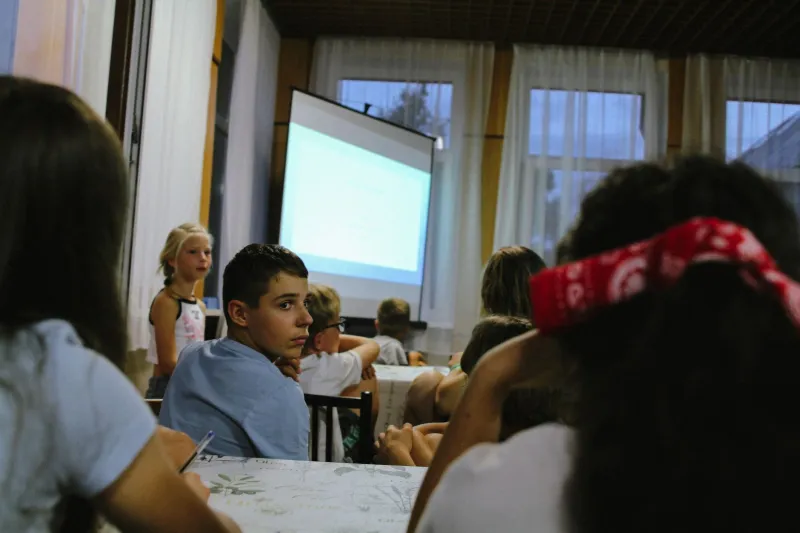
On the other end of the spectrum, some American families go straight into the Turkish public school system. It's free, it's local, and if cultural integration is your goal, nothing accelerates it faster than throwing a kid into a classroom where everyone speaks Turkish.
The obvious obstacle is language. Turkish is not an easy acquisition for English speakers, and kids who arrive without any foundation are going to struggle for at least a semester—sometimes longer. Most parents who've gone this route say the first three to six months are genuinely hard. There are tears. There are frustrating afternoons with translation apps. There are teachers who want to help but don't have the bandwidth to provide individualized support.
And then, often, something shifts.
"By month four, my son was making friends," says Mark, a remote software developer from Austin who relocated with his family in 2021. "By month eight, he was dreaming in Turkish. I'm not exaggerating. The kid is nine years old and he's bilingual now." Mark's daughter, who was twelve when they moved, had a harder time. "The social dynamics in middle school are different. Language barriers hit differently when you're that age."
The academic content in Turkish public schools is generally solid, particularly in math and sciences. But the curriculum is in Turkish, the homework is in Turkish, and parental involvement—something American parents tend to value highly—gets complicated when you can't read the school newsletter.
Homeschooling: More Viable Than You'd Think
A surprising number of American families in Bodrum are homeschooling, and not just as a stopgap while they figure out the permanent plan. Some have made it their long-term strategy.
Turkey doesn't prohibit homeschooling for foreign nationals, though the legal landscape is somewhat gray and worth confirming with a local attorney before committing. In practice, many families operate under the radar, using US-based accredited online programs—Connections Academy, Khan Academy, and various faith-based curricula are popular—while supplementing with Turkish tutors, local sports clubs, and community activities.
The flexibility is the appeal. Homeschooling in Bodrum means your classroom can be a café terrace in November, a boat deck in April, and a hillside village in July. For families with kids who struggled in traditional school settings, or who travel frequently, it can be genuinely transformative.
The downside is socialization, and it's real. Bodrum's expat community is active and tight-knit, and homeschooling families often band together for group activities, but it requires intentional effort. If your kid is naturally introverted or if you're settling in a quieter village rather than central Bodrum, building a peer group takes work.
The Questions to Ask Before You Decide
Every family's situation is different, and there's no universally right answer here. But there are questions worth sitting with before you land:
How old are your kids? Younger children adapt to new languages and social environments much faster than teenagers. A seven-year-old in a Turkish public school is a very different story than a fifteen-year-old.
What's your timeline? If you're planning to stay two years and return to the US, continuity with an American curriculum matters more. If you're thinking of this as a long-term or permanent move, deeper local integration starts to make sense.
What does your budget actually allow? International school tuition is significant. Factor it into your total cost of living calculation before you fall in love with a villa that stretches you too thin.
What do your kids actually want? This sounds obvious, but it's easy to steamroll kids in the logistics of a big move. Kids who feel heard about the school decision tend to adapt better, regardless of which option you choose.
The Part Nobody Talks About Enough
Education in Bodrum isn't just a logistical problem—it's a values question. What kind of childhood do you want your kids to have? What does "success" look like for your family?
Some of the happiest kids in Bodrum are the ones who've spent three years in a Turkish public school and emerged fluent, socially embedded, and genuinely bicultural. Some of the most frustrated parents are the ones who assumed the international school would replicate their life back home and discovered it couldn't quite do that either.
The Turquoise Coast has a way of reshaping your expectations—about real estate, about community, about pace of life. Education is no different. Come with a plan, but hold it loosely.